In today’s highly regulated business environment, organizations face increasing pressure to comply with complex regulatory requirements while maintaining operational efficiency.
Businesses operating across industries such as finance, manufacturing, healthcare, insurance, technology, energy, and logistics must comply with various national and international regulations. Failure to meet compliance requirements can result in financial penalties, legal consequences, reputational damage, and loss of customer trust.
As regulatory complexity continues to increase, Enterprise Compliance Management Software has become an essential investment for organizations seeking to reduce risk, improve governance, and streamline compliance operations.
What Is Enterprise Compliance Management Software?
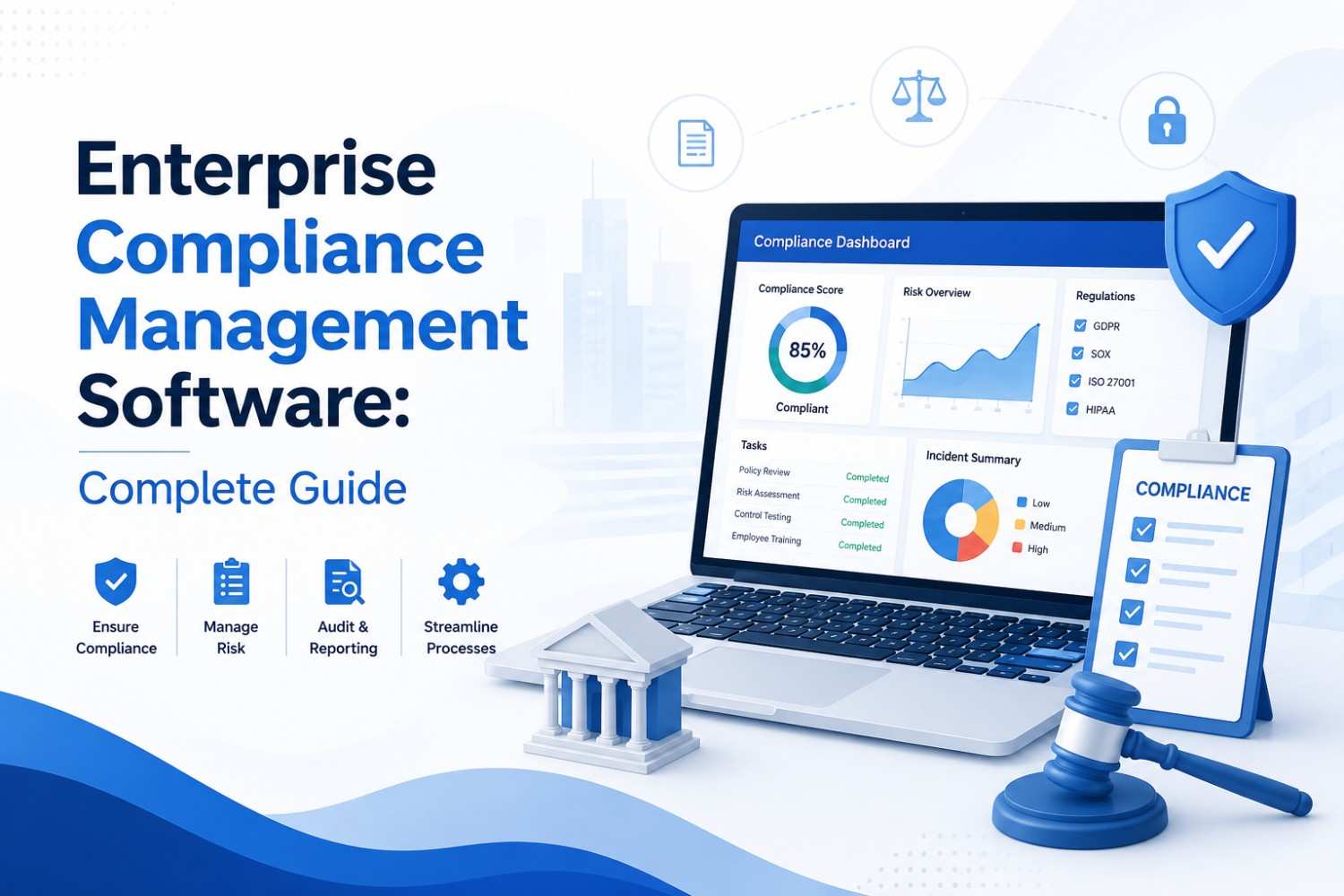
Enterprise Compliance Management Software is a centralized platform that helps organizations manage regulatory obligations, monitor compliance activities, automate reporting, and reduce operational risk.
The software provides tools for compliance monitoring, regulatory reporting, policy management, audit management, risk assessment, governance tracking, internal controls, and documentation management.
Modern compliance platforms integrate artificial intelligence, automation, predictive analytics, and business intelligence capabilities to improve efficiency and visibility.
Why Compliance Management Is Critical in 2026
Businesses face increasing regulations related to financial compliance, data privacy (GDPR), environmental compliance, cybersecurity, and industry-specific requirements. Compliance Management Software helps organizations navigate these challenges effectively.
Key Benefits of Enterprise Compliance Management Software
1. Reduced Regulatory Risk
Helps identify compliance gaps, track regulatory changes, automate tasks, and reduce legal exposure.
2. Improved Audit Readiness
Audit Management Software enables faster audits, improved transparency, reduced audit costs, and better internal controls.
3. Compliance Automation
Reduces manual work through intelligent workflows for policy distribution, monitoring, reporting, and risk assessments.
4. Enhanced Governance
Corporate Governance Software supports executive oversight, risk management, regulatory compliance, and strategic decision-making.
Core Features of Compliance Management Software
Regulatory Compliance Tracking
Monitor regulatory updates, compliance obligations, filing deadlines, and policy requirements in real time.
Governance Risk and Compliance (GRC)
Integrates governance, risk management, and compliance into a unified platform for a complete view of organizational risk.
Risk Assessment Software
Identify vulnerabilities, evaluate risk exposure, prioritize mitigation efforts, and monitor risk trends.
Audit Management Software
Supports audit scheduling, evidence collection, findings management, and corrective action tracking.
AI and Automation in Compliance Management
AI-powered compliance platforms can analyze regulatory documents, detect compliance violations, monitor transactions, identify emerging risks, and generate automated reports.
Cloud-Based Compliance Management Software
Cloud-based solutions offer scalability, accessibility, cost efficiency, and automatic updates to stay aligned with evolving regulations.
Compliance Technology Trends for 2026
- AI-Powered Regulatory Intelligence
- Continuous Compliance Monitoring
- Predictive Risk Analytics
- Integrated GRC Platforms
- ESG Reporting Automation
Frequently Asked Questions
What is Enterprise Compliance Management Software?
Enterprise Compliance Management Software helps organizations manage regulatory requirements, automate compliance processes, and reduce operational risk.
What is GRC Software?
GRC Software combines Governance, Risk Management, and Compliance functions into a unified platform.
How does AI improve compliance software?
AI automates monitoring, identifies risks, analyzes regulations, and improves reporting accuracy.
Conclusion
Enterprise Compliance Management Software has become a critical technology investment for organizations operating in increasingly regulated environments.
Modern platforms combine Governance Risk and Compliance (GRC), Enterprise Risk Management, Compliance Automation, Audit Management, Business Intelligence, Predictive Analytics, and AI-powered monitoring into a single ecosystem.
As regulations continue evolving across the USA, UK, Canada, Germany, Australia, Switzerland, Netherlands, France, Belgium, Italy, Spain, Poland, and other developed markets, compliance software will remain one of the highest-value enterprise technology categories throughout 2026 and beyond.